22.3.2017.
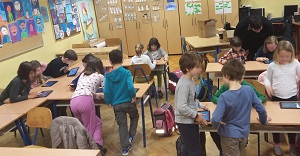
Prva iskustva s primjenom suradničkog učenja na tabletima stečena su kroz eksperimente na nastavi matematike u OŠ Trnjanska. Eksperimenti su provedeni u jednom 1. razredu i dva 2. razreda tijekom prosinca 2016. i siječnja 2017. godine. Tijekom eksperimenata korišteni su matematički zadaci osmišljeni u suradnji s nastavnicama. Za vrijeme jednog nastavnog sata učenici su rješavali nekoliko vježbi na tabletima pri čemu je svaka vježba sadržavala 5-10 zadataka. Za svaku vježbu učenici su nasumično grupirani u parove ili trojke.
4.4.2017.

Krajem studenog 2016., u suradnji s OŠ Trnjanska, započeli smo s nizom eksperimenata koji uključuju Igrifikaciju. Eksperimenti su nastavljeni i u prvim mjesecima 2017. te su na kraju obavljena ukupno 4 kruga testiranja u tri razredna odjeljenja. Za potrebe eksperimenata korišten je program „Zbrajalica“, nadograđen i proširen funkcionalnostima potrebnim za ostvarenje koncepta igrifikacije.
6.4.2017.
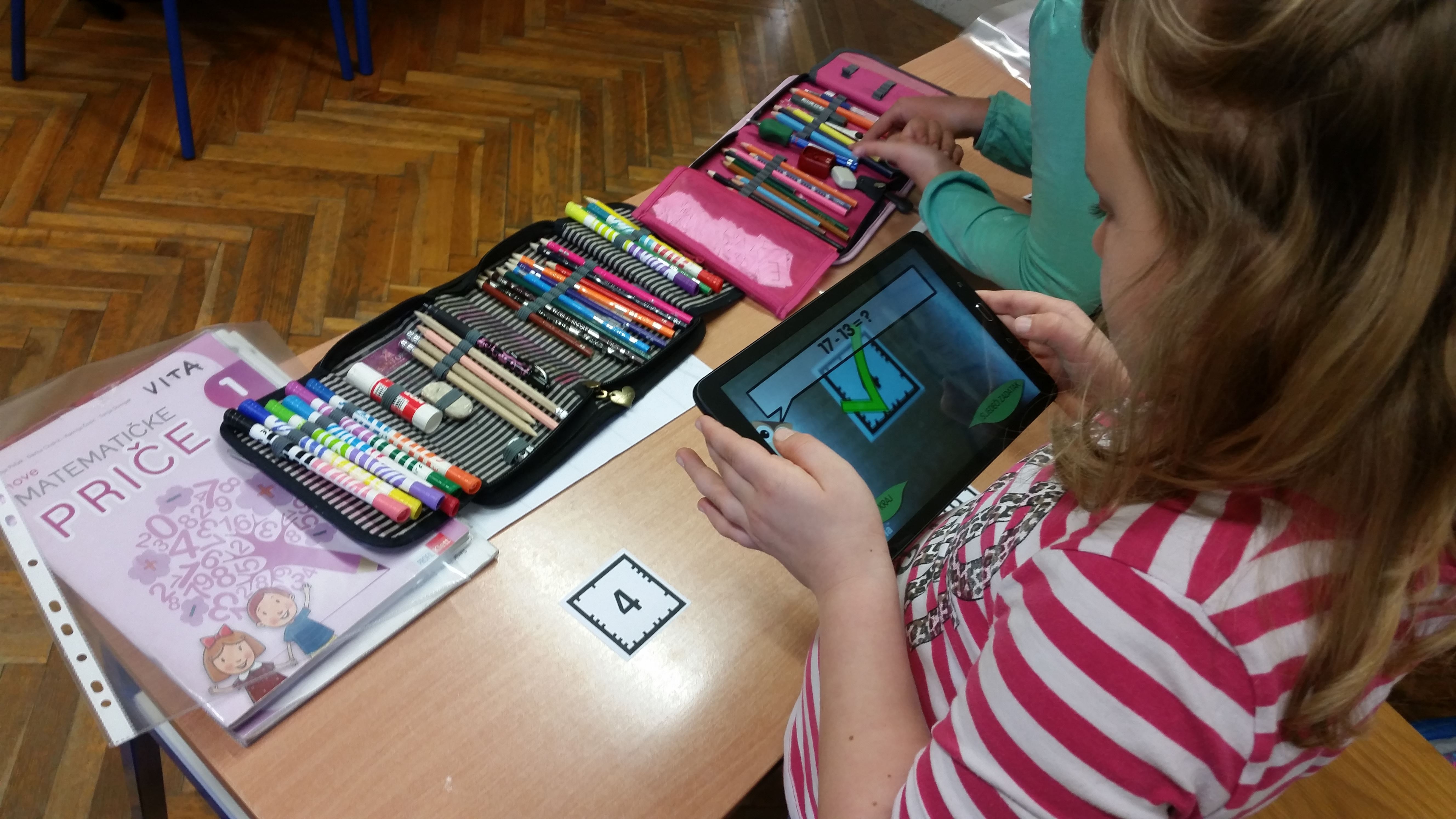
Školska godina 2015./2016. za učenike prvog razreda Osnovne škole Trnjanska protekla je u znaku tableta. U sklopu projekta SCOLLAm učenici su se, osim s InForm aplikacijom, upoznali i s različitim modulima za proširenu stvarnost (AR moduli). No, krenimo redom...
20.3.2015.
This paper presents experiences from a seamless mobile learning project in Singapore. Although the project included a variety of seamless mobile learning designs, this paper focuses on only one, and that is a mobile learning application SamEx in support of a specific learning scenario – an outdoor ZOO field trip. The paper describes SamEx design by focusing on virtual badges gathered by the students during their ZOO trip. The trip was structured by the teachers and scaffolded by SamEx system contextually triggered questions and prompts. The paper describes experiences from the ZOO trip done ...
20.3.2015.
The purpose of this study was to investigate how an augmented reality learning environment system (UNED ARLE) can be used both by teachers and students to add virtual content into educational resources and how can it serve as a tool for acquiring knowledge, motivating and encouraging students. UNED ARLE is used to add contextualized virtual content (3D objects, animated 3D objects, videos, sound files and images) and the accompanying descriptions or narratives into printed material, thereby enriching existing content without any programming skills. This study recruited 44 students of advanced and intermediate cycles ...